Safety Essentials for Alaska Hiking
The Alaskan Wilderness Reality
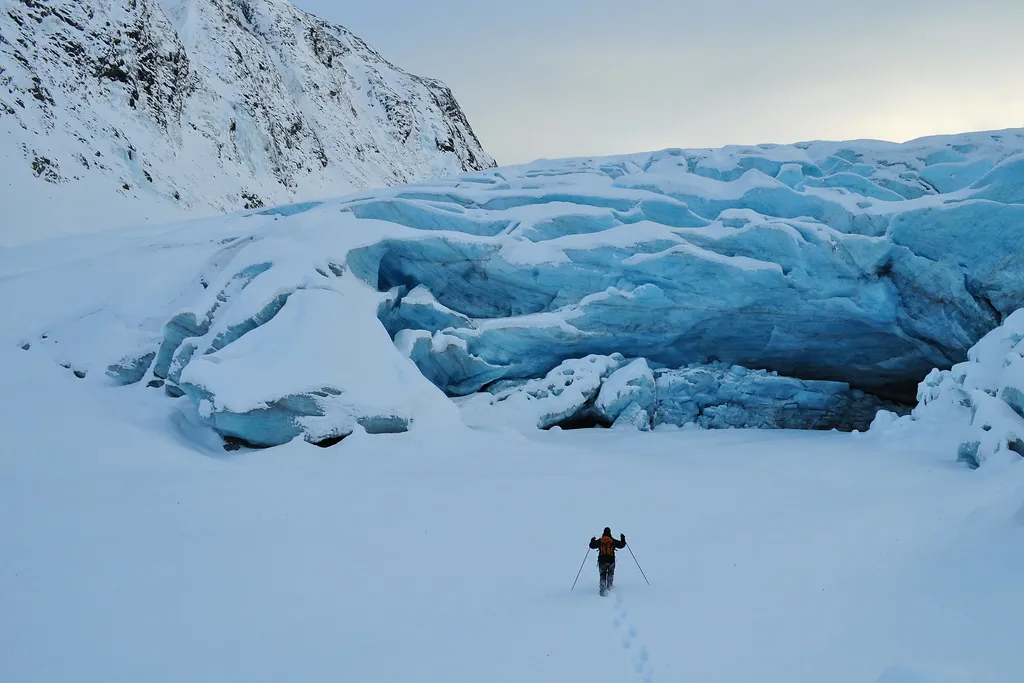
Alaskan trails command a distinct level of respect that differs entirely from hiking in the lower forty-eight. The Chugach National Forest spans millions of acres of raw, glaciated alpine terrain where human interference registers as a faint whisper against a massive geological scale. You step out of your vehicle at the Byron Glacier trailhead, and immediately, the sheer rock walls of Portage Valley dictate the atmosphere. This specific geography operates as a massive atmospheric funnel, accelerating coastal weather fronts off the nearby Gulf of Alaska into violent, localized squalls.
Preparing for a hike here demands a radical shift in mindset. You are walking into a dynamic ecosystem that functions entirely on its own terms, indifferent to your schedule or comfort. Many visitors underestimate the environment because the initial path feels approachable, but the transition from a maintained gravel surface to a chaotic boulder field happens abruptly. A short afternoon walk can devolve into a survival scenario if a sudden storm rolls off the ice field. Recognizing these inherent risks forms the foundation of backcountry competence.
The Alaskan Layering Philosophy
Cotton kills. That old mountaineering adage holds absolute truth in the subarctic environment. A standard cotton t-shirt traps sweat against your skin, and when the inevitable coastal wind rips through the valley, your core temperature plummets. Managing the unpredictable elements requires a strict, non-negotiable layering system designed for rapid adjustments. You start with a synthetic or merino wool base layer engineered to aggressively pull moisture away from your body. Over that, you wear an insulating mid-layer—typically a heavy fleece or compressible down jacket—that traps dead air space to retain your body heat.
Finally, your outer shell acts as an impenetrable armor against the wind and horizontal rain. A high-quality waterproof jacket shields your core from the sudden squalls that define the region. The National Park Service outlines specific Alaska weather safety protocols, emphasizing that hikers should anticipate wild fluctuations in temperature and precipitation. Predicting teh coastal moisture requires constant vigilance. You will likely shed and add layers multiple times within a single hour as you move from the sheltered forest into the exposed glacial moraine.
In Portage Valley, you must prepare to experience four distinct seasons within a single sixty-minute window.
Alaskan Hiking Gear Checklist
Standard athletic shoes fail instantly on this terrain. The mud near the glacier base acts like grease, and the scree fields feature loose, jagged rock that shreds soft-soled footwear. You need waterproof hiking boots with rigid ankle support to cross the shifting moraine safely. Additionally, glacial streams look pristine but carry microscopic glacial silt—essentially suspended rock flour—that destroys standard pump filters. You must carry a specialized purification system designed to neutralize pathogens like Giardia without clogging the membrane.
| Category | Essential Item | Why it is critical |
|---|---|---|
| Footwear | Sturdy Hiking Boots | Mandatory ankle support for shifting scree, jagged rocks, and deep mud near the ice base. |
| Navigation | Satellite Messenger | Crucial communication link in deep mountain dead zones where cellular service disappears. |
| Safety | Bear Spray (in holster) | Your primary deterrent for sudden, close-range wildlife encounters in dense alder thickets. |
| Hydration | Water Filter/Purifier | Essential protection from waterborne pathogens and abrasive glacial silt in backcountry streams. |
| Apparel | Waterproof Hard Shell | Your only defense against rapid temperature drops and sudden coastal rainstorms. |
If assembling this gear list feels overwhelming, many travelers prefer to shift the logistical burden to professionals. Booking a Glacier & Wildlife Discovery Tour grants access to seasoned guides who carry comprehensive safety equipment and possess advanced wilderness first responder training.
Communication & Navigation
The Dead Zone Reality
Cellular towers do not penetrate the deep, narrow valleys of the Chugach range. Service evaporates completely about a mile down the Portage Highway, long before you reach the trailhead parking lot. Carrying a two-way satellite messenger—like a Garmin inReach or a Zoleo—separates a minor inconvenience from a fatal emergency. These units connect directly to the Iridium satellite network, allowing you to trigger an SOS, transmit your GPS coordinates to search and rescue teams, or simply text your family. The Garmin satellite technology infrastructure has revolutionized backcountry safety, making it a mandatory piece of equipment for any hike extending beyond a short, populated boardwalk.
Offline Route Finding
The maintained gravel path at Byron Glacier eventually transitions into a chaotic, unmarked boulder field. Offline maps downloaded via GPS applications like Gaia or AllTrails are mandatory, but relying solely on digital devices introduces a severe risk. Battery drain accelerates exponentially in cold weather, meaning your phone could die when you need it most. You must carry a physical topographic map and a reliable compass as a fail-safe backup. The USDA Forest Service recommends basic trail safety protocols for remote navigation, emphasizing that hikers should possess the skills to interpret topographical lines and triangulate their position without a screen.
Wildlife Awareness & Environmental Stewardship
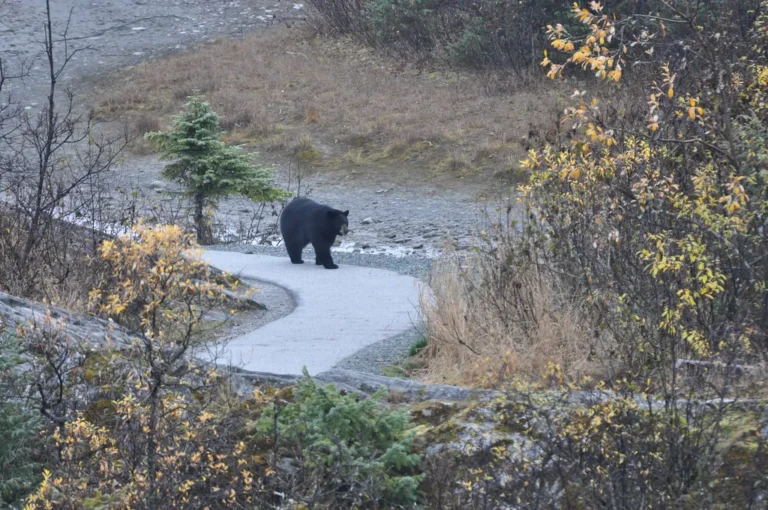
The entire Chugach National Forest operates as an active, densely populated wildlife corridor. Both black bears and massive coastal brown bears forage heavily in the dense alder thickets that line the valley floor. Moose, which grow particularly aggressive during the fall rut or when protecting calves in the spring, command equal space on the trail. You must carry bear spray in an accessible chest harness or hip holster—never buried at the bottom of your backpack under a fleece jacket. A surprise encounter in thick brush unfolds in mere seconds, leaving no time to dig through your gear.
For a detailed breakdown of animal behavior, defensive postures, and deterrent deployment techniques, review our comprehensive guide on Understanding Bear Country Etiquette. If the prospect of tracking animal signs causes anxiety, joining a Glaciers and Wildlife Super Scenic Day Tour places you alongside a local expert who actively monitors the brush for movement and tracks.
Make noise on the trail. A surprised bear is a dangerous bear. Your voice is your first, and best, line of defense in thick alder brush.
Alaska Wildlife Troopers Protocol
Equally important to wildlife safety is your responsibility to the landscape itself. The Leave No Trace Center for Outdoor Ethics dictates that minimizing our physical impact directly protects both the fragile alpine ecosystem and the animals inhabiting it. Stay strictly on the durable surfaces of the established trail until you reach the bouldering zones. Alpine tundra and delicate lichen take decades to recover from a single set of boot prints. Pack out all trash, including organic matter like apple cores, which condition local wildlife to associate humans with food sources.
The Turn-Around Rule & Emergency Signaling
Mountain darkness descends rapidly in these steep, narrow valleys. The ambient temperature drops aggressively the moment the sun dips behind the high peaks, introducing a severe chill factor. You must implement a strict turn-around rule based on time rather than distance. If you reach your designated turn-around hour before hitting the glacier base, you stop, assess your position, and walk back. Pushing forward to satisfy a goal against the clock leads directly to disaster. Getting caught attempting to cross a slick, unstable boulder field by the weak, fading beam of a smartphone flashlight is a nightmare. That is the kind of situation you need to prepare for.
Always pack an emergency bivy sack, extra lithium headlamp batteries, and a signaling mirror. If a sprained ankle or a sudden rockfall anchors you to the mountain, bright clothing and reflective surfaces catch the eye of a passing rescue helicopter. Camouflage or muted earth tones severely hinder search and rescue operations. For extensive specifics on the physical terrain hazards you will face, study our trail map and conditions report. If you plan to venture anywhere near the frozen structures, you must read the critical warnings on ice caves and avalanche safety.
Preparedness as a Mindset
Surviving and thriving in the Alaskan backcountry relies on competence, not luck. Building a comprehensive safety kit and understanding the mechanics of the specific terrain you plan to cross builds genuine confidence. You stop reacting to the environment and start moving in rhythm with it. Whether you are setting out for a two-hour hike to the ice base or plotting a multi-day traverse, the rules remain identical. Respect the weather, carry the necessary communication gear, and never underestimate the immense power of the wilderness.