Glacier Science & Wildlife
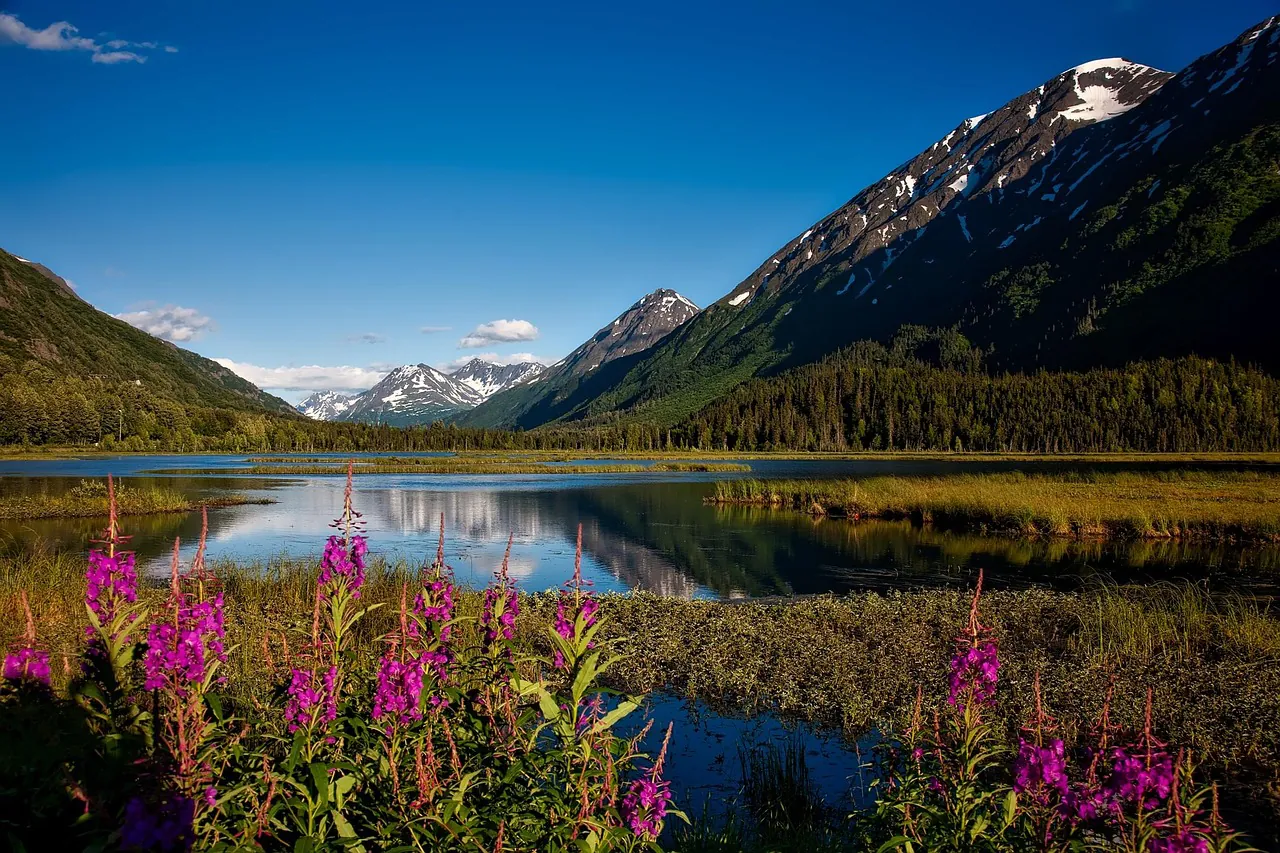
The Living Landscape of Portage Valley
The Portage Valley functions as a dynamic biological corridor where heavy maritime weather systems from Prince William Sound collide directly with the jagged peaks of the Chugach Mountains. This atmospheric collision forces immense precipitation across the region, sustaining the high-altitude ice fields that dominate the geography. The resulting microclimate supports an overlapping ecological zone where a dense coastal temperate rainforest transitions abruptly into a harsh, wind-scoured alpine tundra. Visitors walking the Byron Glacier Trail travel backward through geological time, moving from mature forest into a landscape freshly exposed by retreating ice.
Unlike interior Alaskan ecosystems, which experience extreme temperature fluctuations, the Chugach National Forest maintains a relatively moderated climate due to its proximity to the ocean. This stabilization allows a highly specialized grouping of flora and fauna to thrive at the margins of permanent ice. Moisture dictates every aspect of survival here. The saturated soils support massive fungal networks and rapid plant growth during the brief summer months, while the high-elevation snowpack guarantees a constant supply of cold meltwater to the valley floor. Travelers wanting to understand the broader environmental policies protecting this terrain can find extensive research and land management data through the Chugach National Forest official site.
Understanding this environment requires recognizing that the landscape remains in constant motion. Every boulder field, gravel bed, and stream channel represents the physical labor of glacial ice grinding against bedrock over millennia. Those who prefer structured educational excursions often participate in a Glaciers and Wildlife: Super Scenic Day Tour from Anchorage, which provides expert interpretation of these distinct ecological zones and the mechanisms driving their constant evolution.
The Defining Features of a Hanging Glacier
Unlike valley glaciers that carve deep, U-shaped troughs and fill the valley floor, Byron Glacier sits detached from the lower basin. It is a hanging glacier, clinging to teh high-altitude cliff face above the trail. Hanging glaciers rely entirely on localized snow accumulation in their upper reaches—the accumulation zone—to maintain their mass against the rapid warming trends of Southcentral Alaska. When the weight of the ice exceeds its structural integrity, gravity tears massive chunks away from the main body.
This calving process sends debris crashing down the mountain, creating the secondary snowfields and ice deposits found at the trail’s terminus. Because of this unstable architecture, the leading edge of the ice constantly shifts and fractures. It is a geological formation that scientists are closely keeping track of. Understanding these mechanics is crucial for visitors, as the sheer unpredictability of falling ice creates extreme hazards detailed extensively in our Ice Caves & Avalanche Safety guide.
The Role of Glacial Flour
As the massive weight of the glacier moves down the mountain, it acts as a giant sheet of sandpaper. The ice traps rocks and boulders at its base, grinding them relentlessly against the underlying bedrock. This immense pressure pulverizes solid stone into an incredibly fine, microscopic silt known as glacial flour. Unlike heavier sand or gravel, these tiny particles of quartz and feldspar remain suspended in the meltwater rather than sinking to the bottom.
When this sediment-rich water flows into nearby bodies of water, such as Portage Lake, it radically alters their appearance. The suspended glacial flour absorbs the red, orange, and yellow wavelengths of sunlight while scattering the blue and green wavelengths back to the surface. This selective scattering creates the signature opaque, milky-turquoise color synonymous with glacial lakes. The density of this silt indicates the rate of active glacial erosion occurring high above the valley floor.
Flora of the Moraine: Pioneers of the Rock
The trail leading to the glacier base cuts directly through a recessional moraine—a chaotic ridge of unconsolidated gravel, sand, and boulders dropped by the glacier as it retreated over the last century. This post-glacial terrain is incredibly hostile to plant life. It lacks organic topsoil, retains very little moisture near the surface, and endures punishing winter winds. Yet, the process of primary succession takes hold immediately through a specific sequence of hardy pioneer species.
Lichens and mosses arrive first, attaching themselves directly to bare rock. They secrete weak acids that slowly break down the mineral surface, contributing to the earliest stages of soil formation. Following the mosses, Sitka alder (*Alnus viridis*) colonizes the gravel beds. The alder possesses a specialized symbiotic relationship with *Frankia* bacteria in its root nodules, allowing it to pull nitrogen directly from the atmosphere and fix it into the nutrient-poor ground. As the alder enriches the soil and provides shade, it paves the way for larger species like Sitka spruce and western hemlock to eventually establish dominance.
The Ice Worm: Biology in the Extreme
Perhaps the most fascinating organism in the Chugach National Forest measures less than an inch long and spends its entire life cycle entirely within the ice. The glacier ice worm (*Mesenchytraeus solifugus*) represents a staggering biological anomaly. While most organisms experience cellular damage or death at freezing temperatures, the ice worm thrives exactly at 0°C (32°F). Their bodies produce complex anti-freeze proteins that prevent ice crystals from forming within their tissues.
In a bizarre reversal of standard biology, the ice worm’s cellular energy levels—specifically their ATP production—actually increase as the temperature drops. They navigate through the microscopic water films between ice crystals, feeding on snow algae and wind-blown pollen that accumulate on the glacier’s surface. However, their extreme specialization comes with a fatal vulnerability: if their environment warms to even 5°C (41°F), their membrane structures destabilize, and they literally melt. During the summer, they migrate vertically, retreating deep into the firn (granular snow) during the heat of the day and surfacing only during cool, overcast evenings. Planning your hike around these temperature shifts is essential, a concept further explored in our Seasonal Guide: Summer vs. Winter.
Biological Indicators of the Portage Ecosystem
| Species | Role/Habitat | Observation Tip |
|---|---|---|
| Ice Worm (*M. solifugus*) | Glacier Surface / Firn Layer | Identify dark threads on the ice during cool, overcast evenings. |
| Hoary Marmot (*Marmota caligata*) | Rocky Moraine / Boulder Fields | Listen for sharp, high-pitched alarm whistles echoing off the rocks. |
| American Pika (*Ochotona princeps*) | High-Elevation Talus Slopes | Search for small, dried vegetation piles (haypiles) tucked into rock crevices. |
| Black Bear (*Ursus americanus*) | Valley Floor / Dense Brush | Maintain situational awareness and check Alaska Dept. of Fish & Game for current advisories. |
| American Dipper (*Cinclus mexicanus*) | Fast-Flowing Glacial Streams | Watch for small gray birds diving completely underwater to hunt aquatic insects. |
Wildlife Spotlight: Bears and Biodiversity
The Portage Valley serves as a critical habitat zone for both Black Bears (*Ursus americanus*) and Coastal Brown Bears (*Ursus arctos horribilis*). The geography of the valley naturally funnels wildlife movement along the river corridors and lower brush lines. Bears are drawn to this specific region by the seasonal abundance of food resources. In late summer, the streams flowing from the surrounding mountains fill with spawning sockeye and coho salmon, providing the massive caloric intake required for the bears’ hyperphagia phase—the period of intense feeding before winter denning.
Beyond the salmon runs, the trail margins explode with dense patches of wild blueberries, huckleberries, and salmonberries. Bears spend hours foraging in the thick underbrush directly adjacent to hiking routes. Because the noise of rushing glacial water can easily mask the sound of approaching footsteps, hikers must actively manage their presence. Utilizing a bear bell is largely ineffective; instead, human voices carry best. For comprehensive strategies on navigating this terrain safely, review our dedicated post on Understanding Bear Country Etiquette.
For visitors seeking to observe these magnificent predators with the added security of professional guidance, booking a Glacier & Wildlife Discovery Tour ensures a structured environment. Expert guides track recent wildlife movements and enforce strict distance regulations. Whether you hike independently or with a group, you must prioritize safety by strictly adhering to the wildlife protocols established by the National Park Service and familiarizing yourself with the broader Safety Essentials for Alaska Hiking.
Avian Life and Small Mammals of the Alpine
While megafauna command the most attention, the ecological health of the Byron Glacier trail relies heavily on its smaller residents. The boulder fields deposited by the retreating ice provide a perfect structural fortress for the Hoary Marmot and the Collared Pika. Marmots utilize the deep crevices between massive rocks to construct their dens, where they will spend up to eight months of the year in deep hibernation. During the short summer, they emerge to gorge on alpine grasses and sedges, frequently standing upright as sentinels to watch for predators.
The Collared Pika, a smaller relative of the rabbit, employs a vastly different survival strategy. Pikas do not hibernate. Instead, they spend the frenetic summer months “haying”—gathering mouthfuls of vegetation and leaving them out on sun-baked rocks to dry. Once cured, this vegetation is dragged deep into the talus slopes to serve as a winter food cache. Above them, the thermal updrafts created by the valley walls allow raptors, including Golden Eagles and Peregrine Falcons, to circle effortlessly while hunting the very mammals scurrying through the rocks below.
Educational Ethics & Conservation
“Take nothing but pictures, leave nothing but footprints.” The delicate alpine flora on the moraine takes decades to recover from a single footstep.
This principle extends beyond mere courtesy—it is an ecological necessity. The slow-growing lichens that paint the boulders bright green and orange can take fifty years to expand by just a few inches. When hikers deviate from the established trail to find a better camera angle, they crush these pioneer species, resetting the biological clock of the soil formation process.
Why Conservation Matters
The Byron Glacier trail represents a highly sensitive ecological transition zone. By staying on the maintained gravel path, you actively protect the fragile tundra plants that stabilize the rocky terrain and prevent aggressive erosion. The U.S. Forest Service relies on visitor compliance to maintain the structural integrity of the area. Pack out all trash, including biodegradable items like apple cores, which introduce foreign seeds and attract wildlife to human corridors.
Travelers interested in supporting long-term preservation efforts or purchasing educational field guides specific to Southcentral Alaska should explore the resources provided by the Alaska Geographic Association. For a complete breakdown of trail etiquette, permitted activities, and legal restrictions within the valley, please review our comprehensive Visitor Rules & Guidelines before departing from Anchorage.
The natural science surrounding Byron Glacier offers a profound window into extreme adaptation and geological power. By understanding the forces that shape this environment—from the grinding mechanics of the ice to the microscopic worms living within it—visitors elevate their journey from a simple walk in the woods to a masterclass in glacial ecology. To plan your arrival and minimize your impact on this pristine environment, ensure you study our guide on How to get to Byron Glacier Trail, which details parking logistics and trail access points.