Understanding Bear Country Etiquette
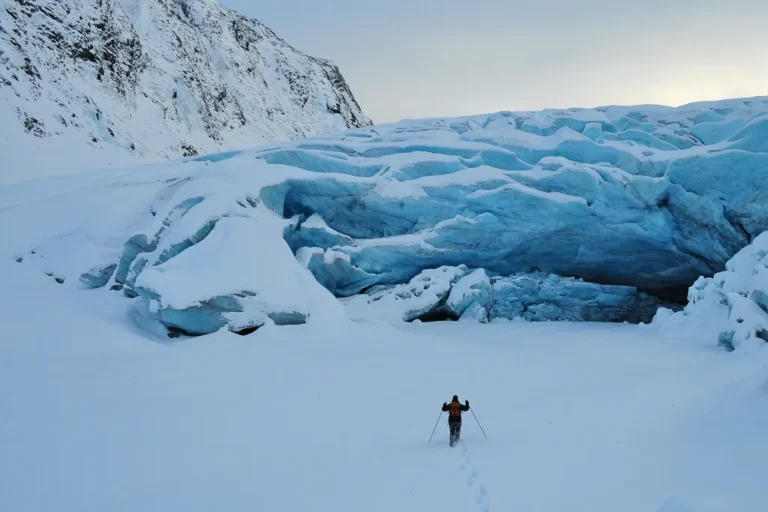
The Byron Glacier Trail sits deep within the Portage Valley, an isolated, heavily forested corridor driven by ancient ice melt and seasonal salmon runs. This specific topography creates an ideal ecosystem for massive local wildlife. Understanding bear behavior serves as a mandatory prerequisite for anyone stepping past the trailhead. You are entering a wild environment shaped by natural forces and inhabited by creatures acting on biological instinct. By adhering to established trail etiquette, you protect your own life while respecting the territory of the animals native to the region.
Wilderness safety demands active participation. Hikers traversing the path from the parking lot to the glacier base must balance their focus between the rugged terrain and their immediate surroundings. If managing wildlife risks independently feels overwhelming, many visitors choose to join a Glaciers and Wildlife: Super Scenic Day Tour from Anchorage, where professional naturalists dictate the pace and monitor the perimeter. Regardless of how you choose to explore, carrying comprehensive knowledge of the local fauna remains your strongest defensive tool.
Respecting the Chugach Wilderness
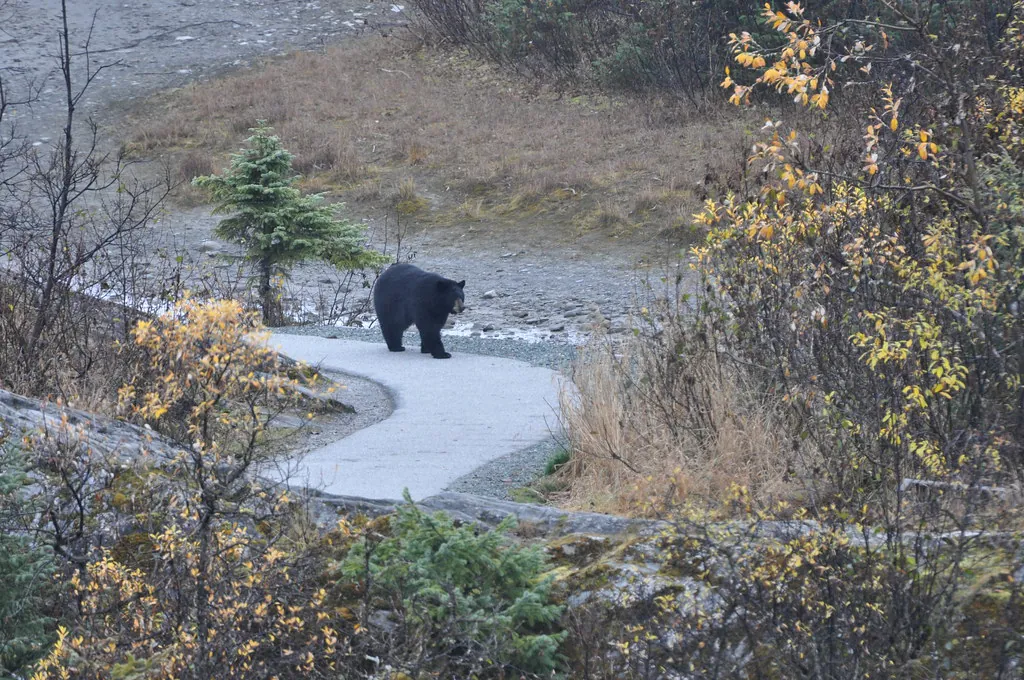
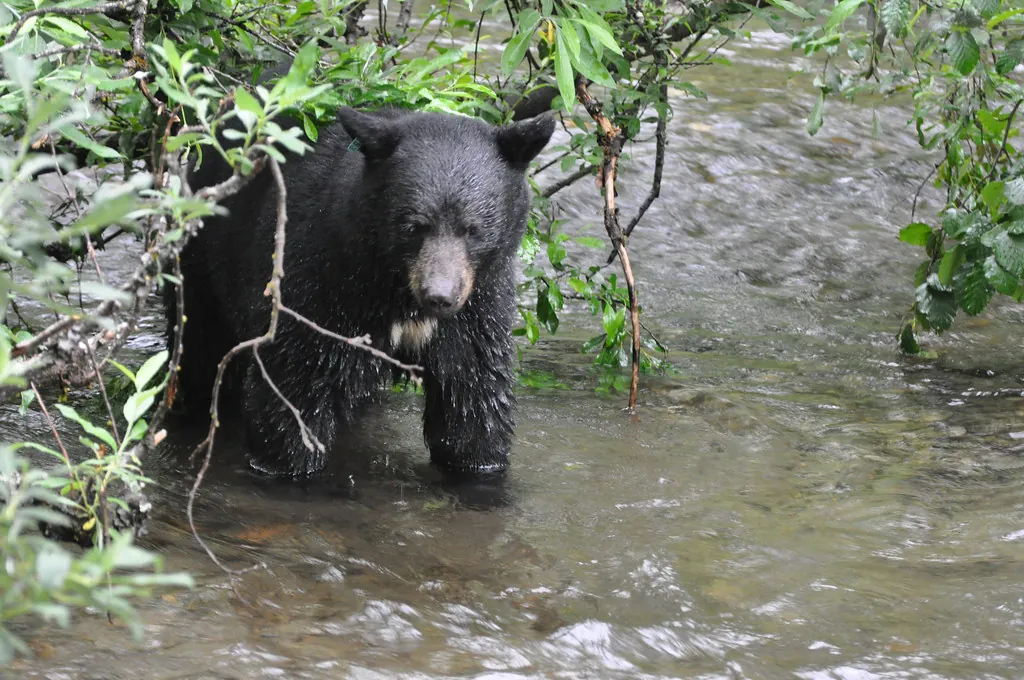
Portage Valley sustains robust populations of both black bears (Ursus americanus) and brown bears (Ursus arctos). Brown bears, commonly referred to as grizzlies when found inland, converge on the nearby creeks during the late summer salmon runs. They gorge on spawning fish to accumulate essential fat reserves for winter hibernation. Black bears tend to occupy the dense alder brush flanking the trail, foraging for berries, roots, and insects. The trail cuts right through a valley that these apex predators are native to.
According to the U.S. Forest Service officials managing the Chugach National Forest, the vast majority of human-bear conflicts stem from surprise encounters. Bears rarely hunt humans. Instead, they attack when startled, when defending a fresh kill, or when protecting their cubs. Recognizing the signs of recent bear activity—such as steaming scat, large tracks in the mud, or freshly overturned rocks—allows you to adjust your behavior before a visual encounter occurs. For a deeper breakdown of the valley’s ecosystem, review our Glacier Science & Wildlife field guide.
Bears do not want to interact with you. Your primary job as a hiker is to make your presence obvious, allowing the wildlife ample time to leave the area.
Bear Identification & Behavior Quick-Reference
Differentiating between a black bear and a brown bear dictates how you should respond during an encounter. Color alone deceives many hikers; black bears frequently exhibit cinnamon or blonde coats, while brown bears can appear nearly black in specific lighting. Focus entirely on their physical anatomy.
| Feature | Black Bear | Brown (Grizzly) Bear |
|---|---|---|
| Shoulder Hump | Absent | Prominent (muscle mass for digging) |
| Face Profile | Straight/Flat from forehead to nose | Dished/Concave with a pronounced stop |
| Ear Shape | Tall, pointed, and prominent | Short, rounded, set low on the head |
| Primary Habitat | Forest, dense brush, wooded slopes | Open alpine areas, river valleys, tundra |
| Claw Length | Short (under 2 inches), curved for climbing | Long (2-4 inches), relatively straight |
Prevention & Trail Etiquette
The Noise Factor
Bears rely heavily on their acute sense of smell and hearing, compensating for relatively poor distance vision. Silent hikers moving swiftly along the gravel path strip the animal of its early warning system. You must generate consistent, unnatural noise. Talk loudly with your group, sing, or clap your hands firmly, especially near teh dense brush sections where visibility drops to mere feet. Many tourists attach small “bear bells” to their packs, but acoustic testing proves these high-frequency chimes fail to project sound far enough through thick foliage or over the roar of a glacial stream. The human voice carries a specific, low-frequency resonance that alerts wildlife immediately. Form groups of three or more whenever possible; larger groups inherently create more noise and present a visually intimidating profile to a curious bear.
Food & Scent Management
A bear’s olfactory bulb is staggeringly powerful, capable of detecting minute odors from miles away. Scent drives their entire migratory and feeding patterns. You must practice aggressive scent management while on the trail. Never leave food scraps, apple cores, or energy bar wrappers on the ground. Organic matter does not belong in the wilderness if it did not grow there. Furthermore, bears investigate non-food scented items with equal curiosity. Apply your sunscreen and bug repellent at the parking lot rather than carrying heavily scented aerosols on the hike. If you plan to carry snacks, seal them in airtight bags. Strict adherence to these Visitor Rules & Guidelines prevents bears from associating humans with food sources, a dangerous behavioral shift that often results in the animal being euthanized by wildlife troopers.
Bear Spray: Selection and Deployment
Firearms demand intensive training and perfect accuracy under extreme adrenaline stress to stop a charging grizzly. Bear spray, an aerosolized capsaicin deterrent, offers a far higher success rate for the average hiker. The expanding fog intercepts the animal’s sensitive mucous membranes, temporarily blinding it and causing severe respiratory distress without inflicting permanent damage.
You must purchase an EPA-approved bear deterrent—standard personal pepper spray lacks the pressure, volume, and chemical concentration required to halt a 600-pound predator. Most reputable canisters cost between $40 and $60 USD and discharge a heavy, cone-shaped cloud up to 30 feet. You can acquire a canister at outdoor retailers in Anchorage, such as REI, or rent one from local outfitters before heading into Portage Valley.
Carrying the spray inside a zippered backpack compartment strips you of all defensive capability during an ambush. An encounter unfolds in fractions of a second. Secure the holster to your belt, chest harness, or backpack sternum strap where it remains instantly acesible. Practice drawing the canister and removing the plastic safety wedge until the motion becomes muscle memory. For comprehensive regulations regarding aerosol deterrents, consult the Alaska Department of Fish and Game’s official bear country guide. If you are flying into Anchorage, remember that TSA prohibits bear spray on commercial flights; you must purchase or rent it upon arrival. Check our Safety Essentials for Alaska Hiking for additional gear recommendations.
Encounter Protocol: What to Do If You See a Bear
Spotting a bear demands immediate, calculated action. Your response hinges entirely on the animal’s behavior and distance. The general rule mandates maintaining a strict 100-yard buffer. If you observe a bear foraging in the distance, stop walking. Assess its direction of travel. If it moves away from the trail, wait patiently for it to clear the area before proceeding.
If an animal emerges onto the path at close range and notices you, freeze. Do not panic. Speak to the bear in a low, resonant, and calm voice—saying “Hey bear, I’m backing away” identifies you as a human rather than a prey animal. Raise your arms slowly to expand your visual footprint. Back away deliberately, keeping your eyes locked on the bear without establishing aggressive, direct eye contact.
Never run. Running triggers an autonomous biological reflex in the bear to chase, pull down, and kill fleeing prey. Even Olympic sprinters cannot outpace a grizzly, which can accelerate to 35 mph in a matter of seconds. If a brown bear charges, it often executes a “bluff charge,” stopping abruptly just feet away to test your reaction. Stand your ground and deploy your bear spray when the animal breaches the 30-foot threshold. Aim slightly downward; the spray cloud will billow upward into the bear’s face.
If a brown bear makes physical contact during a defensive attack (e.g., you surprised a mother with cubs), drop to the ground, interlace your fingers behind your neck, spread your legs to prevent being rolled over, and play dead. Conversely, if a black bear attacks, or if any bear stalks you methodically before attacking, fight back aggressively using rocks, branches, or your bare hands, targeting the eyes and snout. Report all aggressive behavior or close encounters immediately to the Chugach National Forest Glacier Ranger District at (907) 783-3242. For an exhaustive breakdown of these defensive strategies, study the National Park Service bear safety protocols.
External Resources for Trail Safety
Wilderness education remains an ongoing process. Before you review the Trail Map, Distance & Conditions for Byron Glacier, we strongly recommend studying the materials provided by dedicated conservation and safety organizations. They offer specific insights into seasonal behavioral shifts and regional alerts.
- Alaska Wildlife Conservation Center: Located just a short drive from Portage Valley, this facility provides excellent visual reference for identifying local species and understanding their natural habitats.
- BearWise: A nationally recognized campaign offering peer-reviewed educational materials on preventing conflicts, managing attractants, and understanding bear biology.
- Alaska Public Lands Information Centers: Hubs for up-to-date trail closures, recent sighting maps, and expert advice from seasoned park rangers.
If you prefer a guided approach to the region’s raw wilderness, you can incorporate professional oversight into your itinerary by booking the Glacier View & Wildlife Anchorage Adventure Tour, ensuring your group navigates the Chugach landscape with seasoned expertise.